Hot Spicy Font: A Bold Brush Display Typeface for Standout Branding
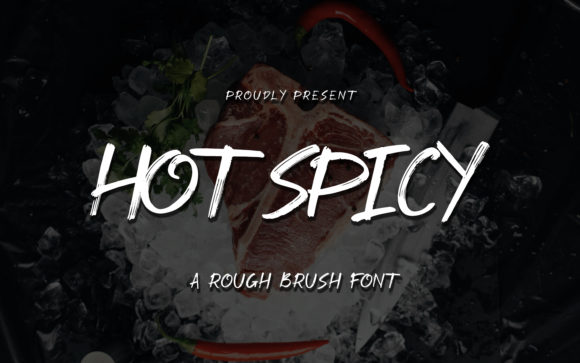
Two weeks ago, I was reworking the labels for my small-batch candle studio—hand-poured soy candles with names like “Smoked Cedar” and “Black Fig & Amber.” The old label font felt safe, but forgettable. Customers loved the scent profiles, yet the packaging didn’t *shout* what made them special: raw texture, artisan care, a little rebellious warmth. That’s when I tried Hot Spicy. Instantly, the labels looked like they belonged in a curated boutique—not just on a shelf at a local market. Hot Spicy is a strong and rough brush display font, and that grit? It’s not accidental. It’s intentional energy—perfect for brands that want to feel human, handmade, and unapologetically present.
Hot Spicy for Product Labels and Handmade Packaging
As a small business owner who prints dozens of labels each week, I needed something that held up at 12 pt on a 2-inch sticker—and still felt bold at 48 pt on a shipping box. Hot Spicy delivers exactly that. Its brush-stroke texture gives depth without sacrificing clarity, especially when printed on kraft paper or matte-finish vinyl. Because it’s a Display font, it’s built for impact—not body text—so I use it only for product names, flavor descriptors (“Spicy Ginger + Lime”), or short taglines (“Hand-poured. Small-batch. Unfiltered.”). No squinting, no pixelation, no lost personality. Just immediate recognition. And yes—it’s fully licensed for commercial use, so you can confidently apply it to physical goods, digital templates, or client work without licensing surprises.
Hot Spicy for Café Menus and Printed Flyers
Last Saturday, I helped a neighborhood café refresh their weekend brunch menu—a double-sided A3 flyer handed out at the door and posted near the counter. Their old font was friendly but blended into the background. With Hot Spicy, the dish titles popped: “Chili-Honey Pancakes,” “Smoked Tomato Frittata,” “Spiced Cold Brew.” The roughness of the strokes echoes the warmth of cast-iron skillets and hand-ground spices—it feels tactile, alive. As a display font, Hot Spicy isn’t meant for paragraphs (I paired it with a clean, airy sans serif for descriptions), but for those first 3–5 words that stop someone mid-step. On print, it holds ink beautifully—even on recycled paper stock. No bleeding, no soft edges. Just confident, character-rich typography that says, “This place has taste—and knows how to show it.”
Hot Spicy for Social Media Graphics and Instagram Templates
If your feed feels like a blur of similar fonts—thin sans serifs, overused scripts—you’ll notice how Hot Spicy cuts through. I tested it across three formats: Instagram Story banners (1080×1920), carousel slide headers, and limited-time offer stickers. In every case, its strong contrast and organic stroke variation made text legible *even* when overlaid on busy food or product photos. Because Hot Spicy is a strong and rough brush display font, it adds visual weight without needing extra effects—no shadows, no outlines required. For small business owners managing their own graphics, that’s gold: less editing time, more authenticity. Just type, adjust spacing, and go. Bonus? It scales cleanly on mobile thumbnails—no jagged edges, no fuzzy corners. You’re getting a premium font that behaves like a pro tool, not a decorative afterthought.
Hot Spicy for Logo Design and Brand Identity Systems
Here’s what surprised me most: Hot Spicy works brilliantly as a primary logo mark—*if* your brand voice matches its energy. Think: spicy sauce makers, tattoo studios, indie music labels, hot sauce subscription boxes, or even a bold new skincare line built around “heat-activated renewal.” It’s not delicate. It’s not neutral. It’s a statement. As a display font, it thrives in isolation—single-word logos, monogram treatments, or stacked initials where texture tells part of the story. I tested it alongside classic pairings: a sturdy geometric sans (for contrast), a refined serif (for balance), and even a subtle handwritten companion (for warmth). Each worked—but only because Hot Spicy anchors the system with unmistakable presence. Just remember: check the included file formats (.OTF/.TTF), confirm multilingual characters if needed (it supports basic Latin), and always preview at actual size—especially for embroidered patches or engraved tags.
Hot Spicy for Thank-You Cards and Customer-Facing Print Collateral
Nothing builds loyalty like a thoughtful thank-you card tucked into an order—and nothing undermines that gesture faster than generic typography. I swapped our standard script font for Hot Spicy on our seasonal thank-you cards (“Thanks for burning bright with us”), and the response was immediate: customers mentioned the “cool, fiery vibe” in follow-up notes. Why? Because Hot Spicy feels personal—like handwriting with intention. Its irregular strokes echo the imperfection of real craft, making mass-printed items feel one-of-a-kind. As a font, it’s versatile enough for foil-stamped business cards, letterpress coasters, or screen-printed tote bags. Use it sparingly—on headlines, quotes, or short affirmations—and let its rough elegance do the heavy lifting. Paired with uncoated paper and warm-toned ink, Hot Spicy doesn’t just say “thank you.” It says, “We made this *for you*.”